• 'Catholic' (KATH-uh-lik)

    ‘Catholic’ can mean three different things. Pay attention to the context, so you don’t mix them up!

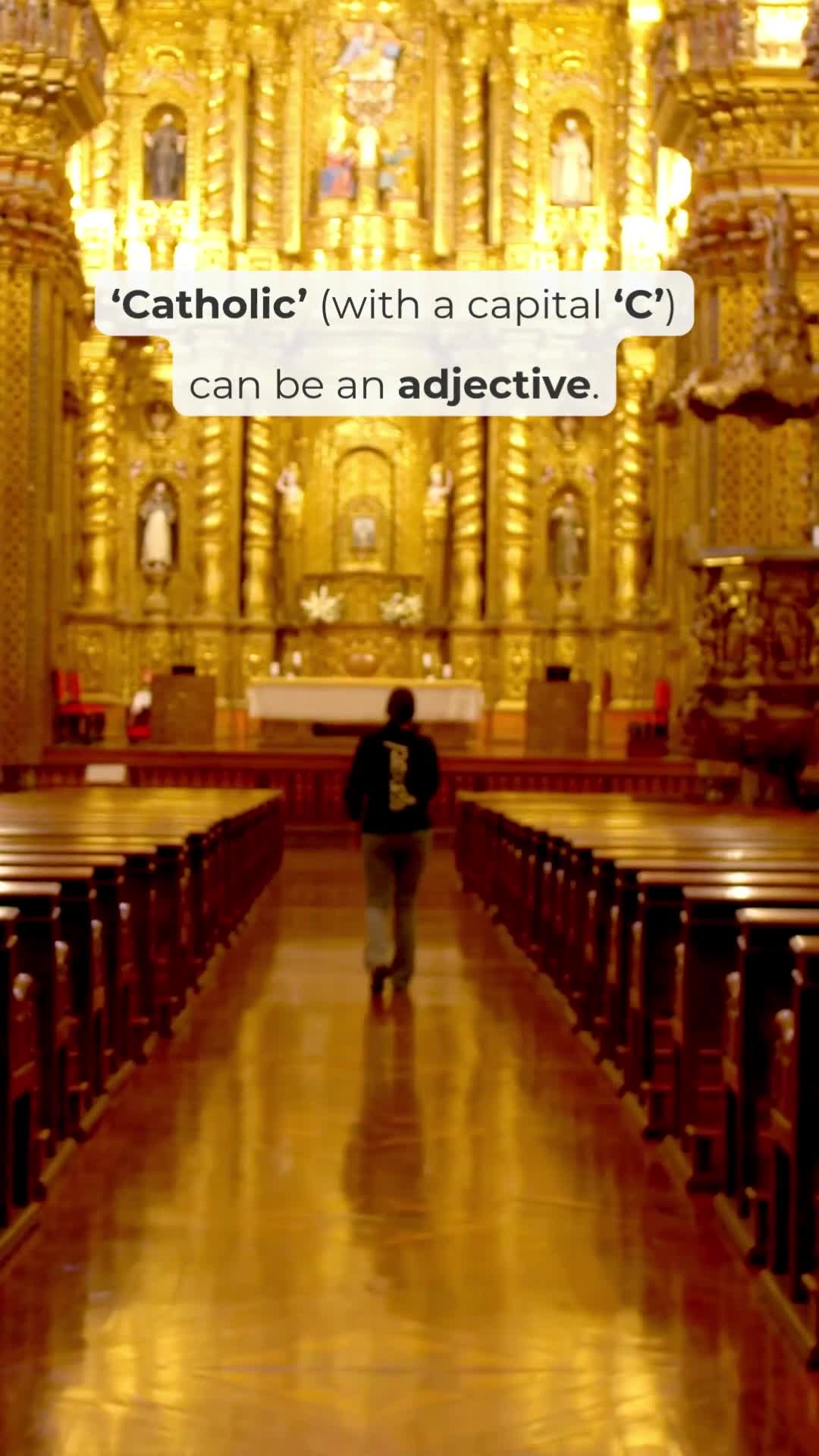
    • ‘Catholic’ (with a capital ‘C’) can be an adjective. For example

      • Thomas Aquinas was a Catholic theologian.

      • Notre Dame is a Catholic cathedral.

    • It means ‘related to the Catholic Church’.

    • The Catholic Church is one of the oldest Christian denominations.

      At around 1.4 billion members, it is also the largest denomination in the world today.

    • It is led by the Bishop of Rome, ‘the Pope’ (currently Leo XIV).

    • For the exam, it is important to know the Catholic Church’s teaching on:

      • Original Sin

      • The Sacraments

        • Baptism

        • Holy Communion

      • Just War Doctrine

    • ‘Catholic’ can also be a noun. For example:

      • Mary I was a Catholic.

      • Elizabeth I was a Protestant.

    • In this case, it means ‘someone who belongs to the Catholic Church’.

    • ‘catholic’ (with a lower-case ‘c’) is also an adjective.

    • It means ‘universal’ or ‘all-encompassing’.

    • The ‘Catholic Church’ call themselves ‘Catholic’ because they claim to be the universal church.

    • However, you will sometimes hear Protestants talk about the ‘catholic Church’.

    • By this they mean everyone in the world who sincerely follows Jesus, regardless of what denomination they actually belong to.